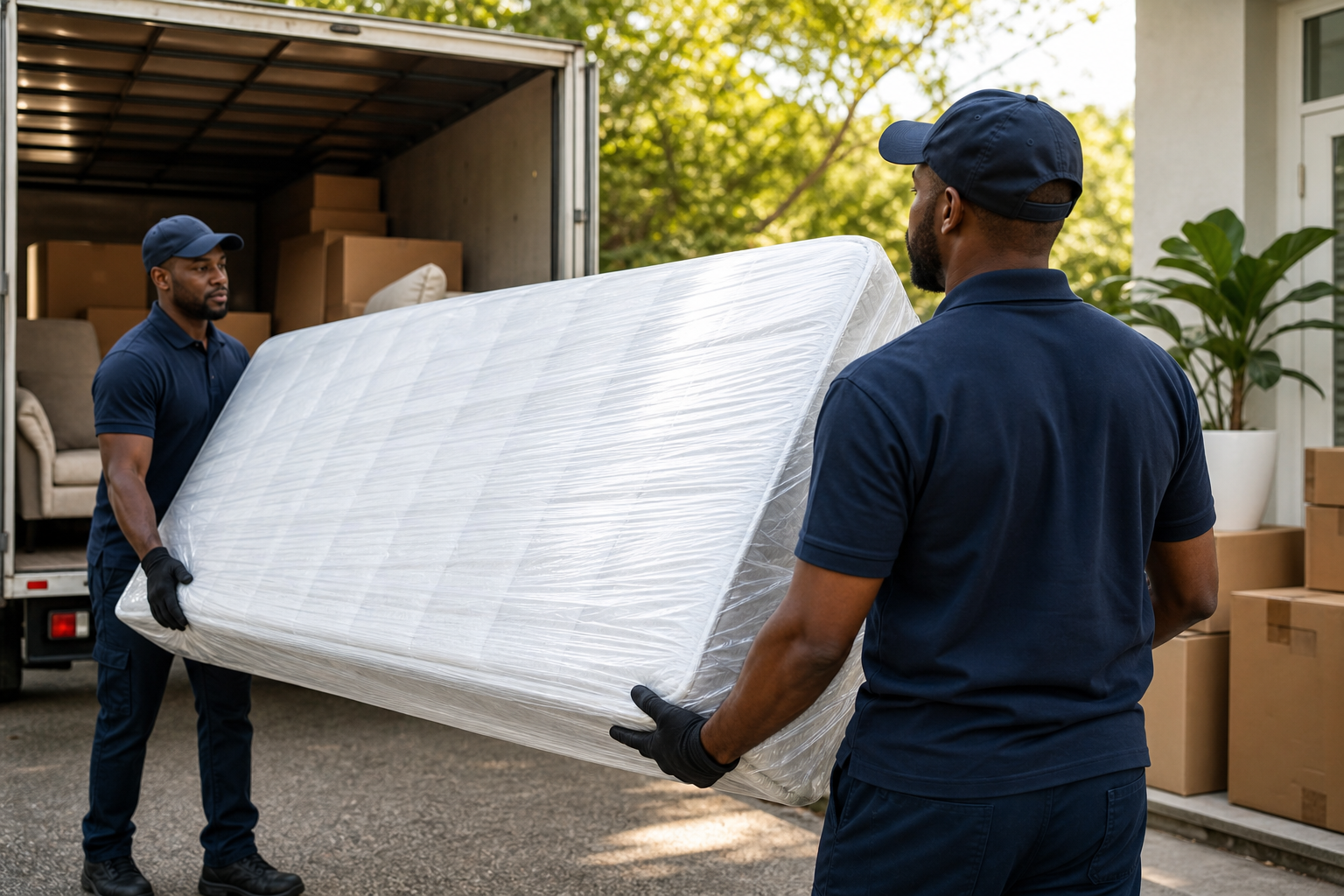
Protective mattress wrapping explained for movers and homeowners
What protective mattress wrapping is and how it differs from encasements and protectors
Protective mattress wrapping describes the short term coverings movers apply to a mattress for transport or storage. Professional crews typically use heavy duty plastic moving bags, padded moving wrap, shrink film, or, when needed, consumer-style zippered encasements. The goal is to protect the mattress from dirt, moisture, scuffs, and abrasions that occur during handling and transit.
Mover wrap versus zippered encasement
A zippered encasement is a consumer product that fits around all six sides of a mattress and closes with a zipper. It is designed for ongoing bedroom use or long term storage and is often marketed with features such as waterproof backing, micro-zipper technology to reduce pest ingress, and breathable fabric. Measure mattress depth before buying to ensure the encasement fits without strain. See an example encasement guide for typical features and sizing ranges.
Everyday protector versus transit protection
Everyday mattress protectors are thin, breathable covers intended to guard against spills and bedwear during nightly use. Transit protection used by movers prioritizes handling resilience. Movers choose materials that add cushioning and a short term moisture barrier rather than the comfort or breathability of consumer protectors. If you expect to keep the mattress covered after the move, a true zippered encasement is usually the better long term solution.
Why protective wrapping matters for moves and storage
Mattresses are large, awkward items that are easily damaged in common moving scenarios. Tears from corners, moisture from rainy or snowy carries, and irreversible stains from dirt all occur when mattresses travel unprotected. In many cases these damages cannot be repaired and will reduce the mattress lifespan or void warranty conditions.
Key benefits of protective mattress wrapping include:
- Barrier against dirt and moisture during outdoor loading, hallway carries, or extended truck time.
- Reduced scuffs, punctures, and abrasion from narrow stairways, tight corners, and loading ramps.
- Easier stacking and handling in the truck, because wrapped mattresses slide and secure more predictably.
- Lower pest exposure during short term storage when sealed encasements are used.
Practical guides note that the right combination of padding and an outer film is often the best defence for wet weather or rough handling, while a zippered encasement is preferred for long term pest prevention and storage. For how-to notes on wrapping steps and common damage examples, see the mattress moving protection overview.
Types of protective wrapping movers use and fit considerations
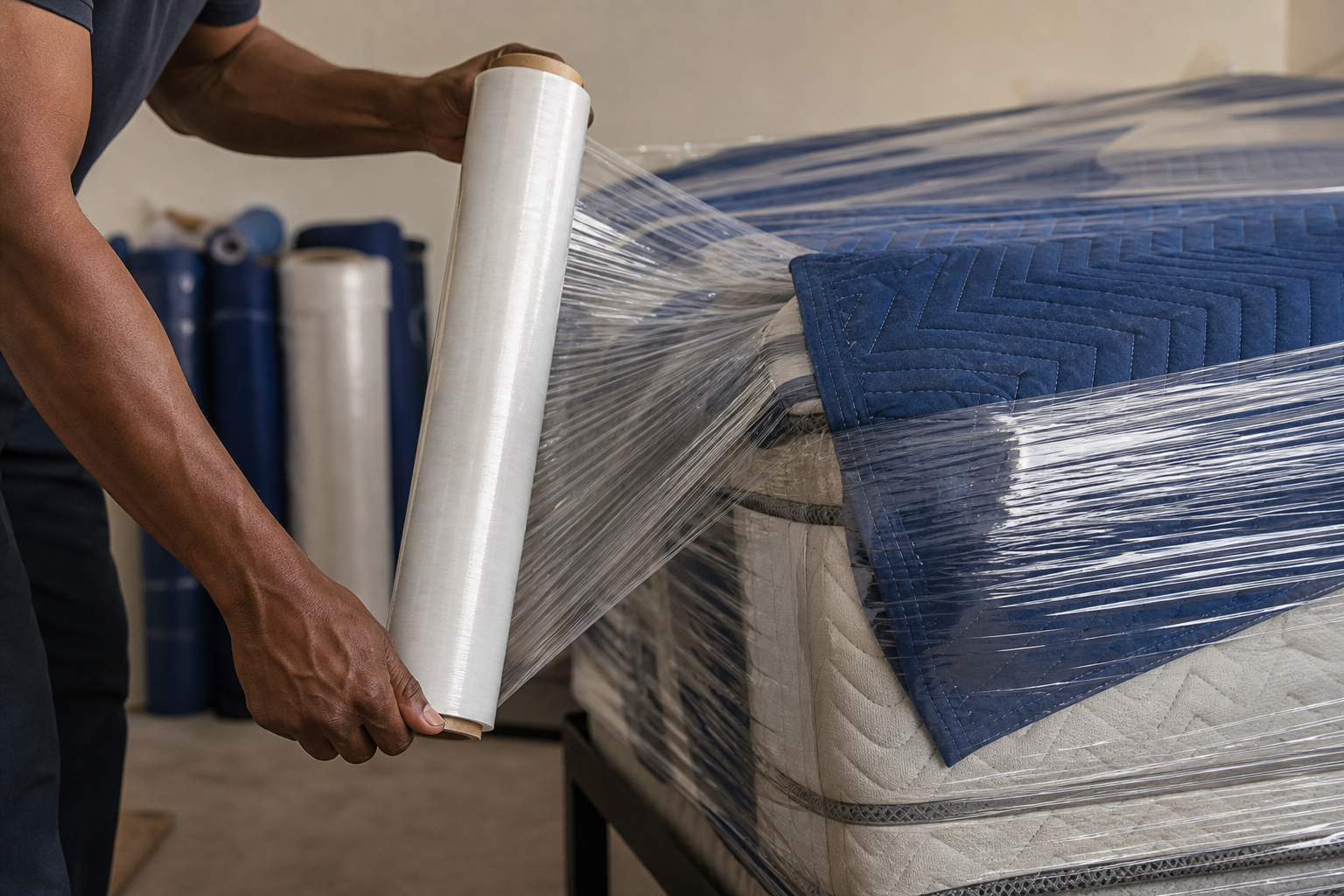
Movers select wrapping based on risk, mattress type, and customer priorities. The most common materials are:
Zippered encasement basics
Zippered encasements cover all six sides and seal with a zipper. They are preferred when bedbug prevention or long term protection in storage is required. Encasements come in standard depths and special sizes for pillow top or European mattresses, so accurate depth measurement matters.
Moving bag and padded wrap strengths
Plastic moving bags provide a quick, cost effective moisture barrier. Padded moving wrap adds cushioning against knocks and scrapes, which matters during stair carries or when loading close to other furniture. Shrink film helps hold padding in place and creates a tighter moisture seal for short term transit. Professional movers commonly combine padding with an outer plastic film when weather or handling risk is elevated.
Measurements that matter
Measure length, width, and depth at the thickest point, including toppers. Deep pillow top mattresses and added toppers often require larger encasements or additional padding. Provide these dimensions to your mover ahead of time so they bring correctly sized encasements or enough wrap and padding on moving day.
Decision checklist: 7 clear items to decide whether to request protective wrapping
-
Mattress value and warranty
If the mattress is new or high value, request protective wrapping to preserve condition and support warranty claims. For low cost mattresses you may accept more risk, but consider the replacement cost before declining protection.
-
Move distance and exposure
Long-distance moves, or any move that includes outdoor loading or extended truck time, warrants heavy duty wrap or a combination of padding and outer film. Short in-building carries may allow lighter protection, but padding is still recommended for tight access.
-
Storage duration
If the mattress will be stored more than a few days, choose a sealed encasement or heavy duty wrap to reduce pest, dust, and moisture risks during storage.
-
Building access and handling risk
Narrow corridors, flights of stairs, and elevator restrictions increase physical handling and the chance of scuffs. In these cases add padded wrap so the mattress has shock resistance during carries.
-
Bedbug or pest concerns
When moving from a location with known pest reports or unknown mattress history, choose a purpose-made zippered encasement for bedbug prevention rather than a simple plastic bag.
-
Existing home protection
If you already use a consumer fitted protector, do not assume it will survive moving. Consumer protectors are not designed for transit. Decide between a zippered encasement for long term protection or mover wrap for short term handling protection.
-
Scheduling constraints and move timing
Same-day or after-hours moves can increase handling speed and risk. When possible, schedule off-peak times to allow more careful handling. If you are in the GTA, consider a mover with flexible hours to match lower-risk windows.
Exact questions to ask your mover before you book protective mattress wrapping

Use these precise questions in a phone call or on-site estimate. Each item includes what to expect in a satisfactory answer.
-
What wrapping materials will you use for my mattress?
Satisfactory answer: “We use padded wrap plus a heavy duty plastic bag, or we can fit a zippered encasement for pest prevention.” The mover should name the materials and the reason for their choice.
-
Will seams be sealed and is the outer film water resistant?
Satisfactory answer: Confirmation that seams are overlapped and the outer film is water resistant for transit. If you need extended waterproof protection, ask for specifics in writing.
-
Do you provide zippered encasements for deep mattresses?
Satisfactory answer: They carry encasements in common depths or they will request mattress depth so they can supply the right size.
-
Is wrapping included in the quote or charged separately?
Satisfactory answer: A clear pricing statement listing wrapping as a line item or confirming it is included with packing services.
-
How do you handle claims if damage occurs despite wrapping?
Satisfactory answer: A summary of their handling and claims process with reference to insured services if available. If you need insured coverage, get confirmation in writing.
When you request a quote, add mattress measurements and note any condo access rules or storage instructions so the mover can plan materials and timing accurately.
GTA and Mississauga considerations that change the decision
Local factors commonly affect the need for protective wrapping. Condo moves often require elevator booking, hallway protection, and strict corridor rules that increase handling time. Older buildings with narrow stairwells increase the chance of scuffs and require extra padding. Rain and snow in wet seasons raise moisture risk during outdoor carries, so an outer water resistant film is valuable for moves in Mississauga and the wider GTA.
For dock-to-dock shipments and warehouse storage, sealed encasements or heavy wrap reduce pest and moisture exposure over multiple handling stages. If you need flexible scheduling to avoid busy windows, choose a mover that advertises extended hours to arrange an off-peak move.
Sudan Movers offers free consultations and 24/7 scheduling for moves across the GTA. Use a consultation to confirm elevator bookings, building rules, and the specific wrapping option you prefer.
Common objections and short answers
-
I already use a consumer mattress protector.
Short answer: Consumer protectors are for nightly use and may not protect against tears or heavy handling. Add mover-grade wrap or a zippered encasement depending on whether you need short term transit protection or long term coverage.
-
Plastic wrap is fine and cheaper.
Short answer: Basic plastic can stop dirt, but it offers little padding and may tear under stress. For high-value mattresses or difficult carries, padded wrap plus outer film is safer.
-
It costs too much.
Short answer: Think of wrapping as insurance against often irreparable damage. Use the decision checklist to weigh the replacement cost versus the wrapping fee.
-
Will wrapping void my mattress warranty?
Short answer: Short term protective wrapping used for moves typically does not void warranties. If you are concerned, keep receipts for the wrapping and confirm warranty terms with the mattress manufacturer before shipping.
Next steps and how to request protective mattress wrapping from Sudan Movers
Before you call, measure mattress length, width, and depth at the thickest point and note any toppers. Mention condo access, storage plans, and whether you require bedbug prevention. Use the exact “ask your mover” questions from this article during the estimate.
For local moves in Mississauga and across the GTA, contact Sudan Movers for a free consultation and custom quote that includes mattress wrapping options. Their site explains packing and mattress handling choices so you can confirm materials and price when you book.
Frequently asked questions
Is a consumer mattress protector the same as protective mattress wrapping for a move
No. A consumer mattress protector is for daily hygiene and comfort and may not provide padding or sealed seams for transit. Protective mattress wrapping used by movers focuses on handling resilience and temporary moisture resistance. For long term pest prevention, use a zippered encasement.
Will professional protective wrapping prevent water damage during bad weather
Professional wrapping reduces the risk of moisture exposure during transit by adding a water resistant outer layer. It is not a guaranteed waterproof solution for extended outdoor exposure, so coordinate covered loading and off-peak scheduling when heavy weather is expected.
Does protective mattress wrapping remove the need for a zippered encasement for bedbug prevention
No. A purpose-made zippered encasement that seals all sides is the preferred choice for bedbug prevention and long term storage. Temporary mover wrap helps in transit but is not a substitute for a sealed encasement used over weeks or months.
How should I measure my mattress so a mover can provide the right wrap or encasement
Measure length, width, and depth at the thickest point, and note any attached toppers or irregular shapes. Provide these dimensions when you request a quote so the mover brings correctly sized encasements or enough wrap and padding.
Will adding protective mattress wrapping void my mattress warranty
Most warranties are not voided by short term moving wrap. If you are concerned, keep documentation for the wrapping and confirm warranty terms with the mattress manufacturer before shipping.
Ready to plan protection for your mattress? Contact Sudan Movers for a free consultation and a custom quote that includes mattress wrapping options for Mississauga and the greater Toronto area.