
Questions to ask before choosing moving supplies for wrapping
Choosing the right moving supplies for wrapping can be the difference between items that arrive intact and a costly damage claim. Start by deciding whether you will buy materials yourself or rely on the moving company, then use a short set of questions to confirm what is included, what costs extra, and whether the materials are professional grade. Sudan Movers offers blanket wrapping, protective mattress wrapping, and 24/7 scheduling for GTA moves, but you should still verify exact materials and labour on every booking. For a quick overview of what movers commonly supply, see the Bellhop explanation of company-provided packing materials and add-ons in the moving industry.
Questions to ask any mover or supplier before you commit
Use this compact checklist when you call or request a quote. Ask each question plainly and request the answer in writing.
- Which wrapping materials are included in the base quote and which are extra? Ask for a line-item list.
- Do movers provide blanket wrapping, stretch wrap, mattress bags, bubble wrap, and moving pads, or only boxes and tape?
- Is wrapping labour included or billed by the hour, per piece, or as an add-on service?
- Can you see a photo or sample of the blankets, stretch film, and mattress bags that will be used?
- How many blankets, rolls of stretch film, and mattress bags are estimated for my job size and how are overages charged?
- Will unused materials be returned or credited after the move?
- What protection do you offer for electronics, glass, and heavy appliances and is anti-static packaging available?
- Do you recommend or require specific materials because of building rules, elevator protection, or insurance requirements?
Moving companies commonly either supply protective materials or offer them as add-ons, so it helps to confirm the specifics up front rather than relying on a vague “materials included” reply. For industry context on this practice, consult the Bellhop article on whether moving companies supply boxes and packing supplies.
Must-ask supply inclusion and charge questions
These follow-up questions prevent surprise charges on moving day.
- If you want blanket wrapping, ask if the quoted price covers sufficient blankets and if the rate is per blanket or per truckload.
- For stretch film, ask the gauge or thickness and whether it is commercial grade for repeated handling.
- Confirm mattress bag type and whether zipper or sealed heavy-gauge bags are used for water and dirt protection.
- Ask whether fragile packing for glass, mirrors, or art is a separate service and what materials are used.
- Request the mover’s policy on refilling or replacing materials during the job and how that affects final billing.
When a mover cannot name quantities, product types, or prices, treat that as a warning sign and request a written estimate before allowing work to start.
Product quality checks and specifications to demand
Not all moving supplies perform the same. When protection matters, ask for these specific product details and watch for vague answers.
- Blanket weight or GSM. Commercial moving blankets are heavier and more protective than thin disposable covers.
- Stretch film thickness. Commercial-grade film resists tearing and secures blankets and moving legs better than lightweight consumer film.
- Bubble wrap grade and bubble diameter. Larger bubbles give more cushioning for big shapes, smaller bubbles work best for small fragile pieces.
- Mattress bag gauge and closure type. Look for sealed heavy-gauge or zippered bags that protect against water and dirt.
- Anti-static packaging for electronics. For TVs and sensitive equipment, request anti-static foam or film to reduce the risk of electrostatic damage.
- Tear strength for box liners and furniture pads. Ask whether pads are sewn and whether corners are reinforced for heavy edges.
For a checklist of recommended packing materials and household alternatives, the Moving.com guide lists common supply types and how to substitute linens and towels for cushioning when appropriate.
Item-specific wrapping: furniture, mattresses, appliances and electronics
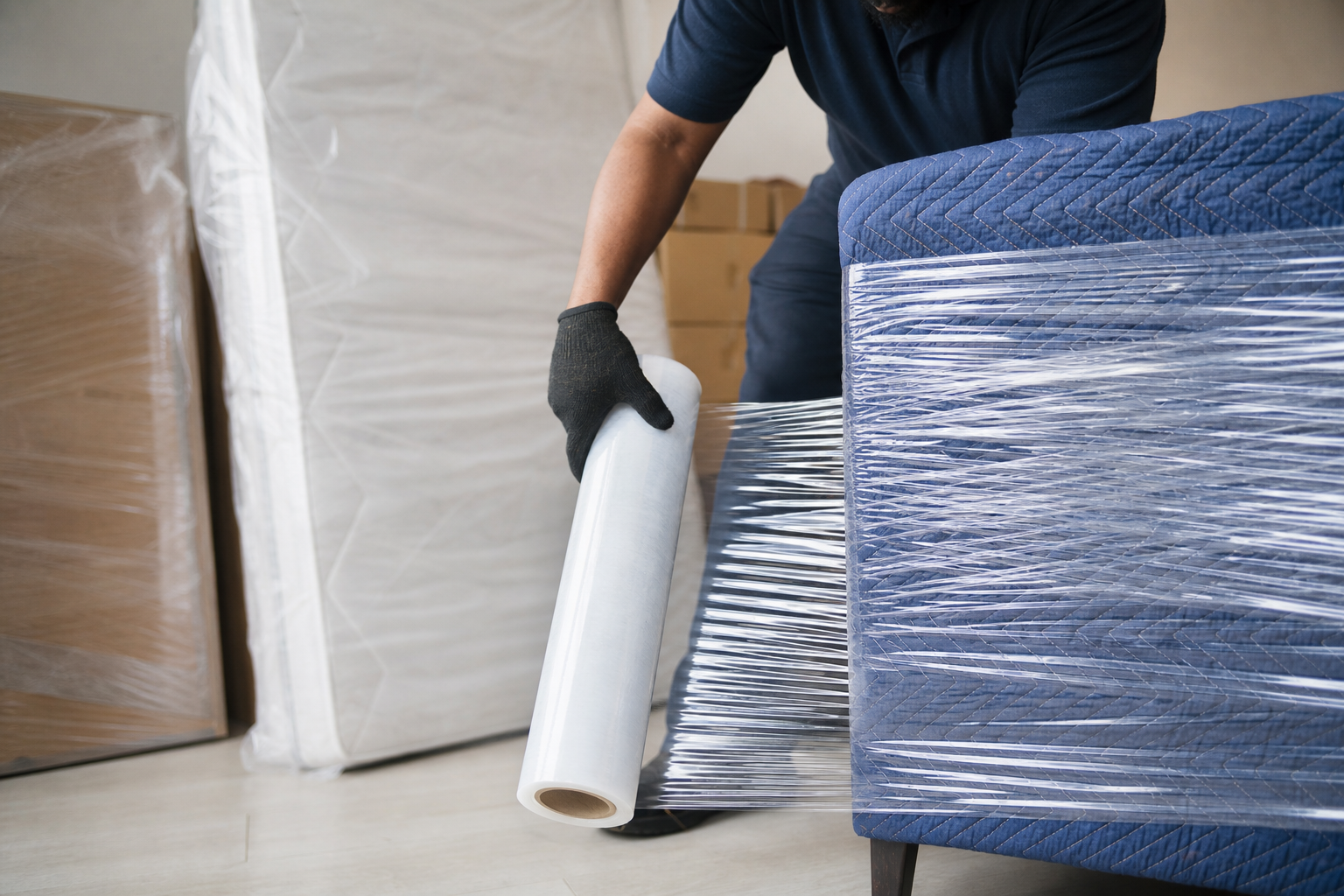
Different items need different materials. Below are concise, actionable recommendations you can demand from a mover or buy ahead of time.
- Upholstered furniture: heavy moving blankets secured with commercial stretch film to keep blankets in place and protect legs and arms.
- Wood furniture: quilted pads plus corner protectors and film that avoids long-term contact with finishes when possible.
- Mattresses: sealed, heavy-gauge mattress bags that are waterproof and dustproof for the duration of transit and storage.
- Appliances: padded covers for doors, straps for stability, and locking or taping appliance doors to prevent movement. Disconnect hoses and secure loose parts.
- Electronics: original boxes when available, anti-static film and foam inserts, and separate labelled boxes for cords and remotes.
Furniture, mattress, appliance and electronics checks
- Furniture: ask that glass is packed separately or double wrapped, and verify legs have padding to prevent gouging floors or walls.
- Mattress: photograph both sides, insist on sealed wrapping, and label mattress orientation to avoid confusion on arrival.
- Appliances: photograph serial numbers and existing damage, remove loose shelves and pack them separately, and ask if the mover uses appliance dollies with straps.
- Electronics: make a list of serial numbers, require anti-static protection, and confirm a staged unpacking plan to minimise risk when reconnecting devices.
Documenting condition with photos helps any damage claim. Keep copies of the mover’s written estimate that lists the wrapping products and labour you agreed to.
Warning signs and common mistakes that add risk or cost
Avoid these frequent mistakes when choosing moving supplies for wrapping and when hiring the mover who provides them.
- Accepting “materials included” without details. That phrase often hides thin blankets or limited quantities.
- Failing to request a sample photo. If the mover resists showing the actual blankets or film, ask why and consider another company.
- Assuming household linens will protect heavy or shaped furniture. Linens cushion but do not substitute for commercial pads and film on long moves.
- Buying cheap consumer film that tears on edges and leads to unprotected contact during loading.
- Ignoring building move rules. Condo management may require non-marking blankets or add floor runners and charge for damage if rules are not followed.
How condo and building rules change your wrapping choices
Condo buildings in the GTA commonly require move bookings, elevator protection, and non-marking materials. Confirm building-specific rules before buying supplies or scheduling a mover. Professional movers often supply the exact blankets and runners that buildings accept and can handle the protective labour, which reduces the risk of building damage fees. Sudan Movers lists building-aware services and protective wrapping options for local moves in Mississauga and the GTA, so mention your building’s rules when you request a quote.
Where to buy or rent supplies in the GTA and what to expect for same-day needs

If you must source items at short notice, choose suppliers that offer commercial-grade pads, heavy-gauge stretch film, and sealed mattress bags rather than consumer alternatives. Retail and rental chains carry moving supplies, and their product lines differ in grade and availability. For general product lists and where to find supplies, see the Moving.com checklist and the Bellhop overview of company-provided packing materials. For retail buying guides, many big-box stores and local moving-supply shops offer same-day pickup depending on stock.
Same-day pickup, rental and what to bring to the supplier
- Measure large items and door openings and bring those dimensions to the supplier so staff can recommend exact blanket sizes and film lengths.
- Bring photos of key pieces to ensure you buy the right protection for glass tops or irregular shapes.
- Ask about returns for unused rolls or pads to avoid paying for surplus materials after the move.
- If renting dollies or specialty equipment, check pickup and drop-off windows to match your moving schedule.
Decision checklist: how to prioritise protection, cost and sustainability
Use this quick rubric before you order or accept supplies.
- Determine protection level: fragile and high value first, then heavy and awkward pieces.
- Confirm mover inclusion: if a reputable mover provides heavy blankets and labour, you often save time and reduce risk of building violations.
- Compare product grade: commercial blankets and heavy-gauge stretch film are worth the extra cost for long-distance or complex moves.
- Factor sustainability: reusable blankets and rented equipment reduce waste compared with single-use film, and household linens can supplement cushioning.
- Set a small contingency budget for last-minute professional wrapping if a piece proves difficult to protect on moving day.
Final step: get a written quote and check samples before move day
Before move day, request a written, line-item quote that names the specific wrapping materials and estimated quantities. Ask the mover to provide a photo or sample of the blankets, stretch film, and mattress bags to be used. Confirm any condo or building restrictions in writing and photograph the condition of key items. If you want a free consultation or a written quote for protective wrapping and packing services, contact Sudan Movers for details and scheduling.
Frequently asked questions
- Will my mover provide moving supplies for wrapping or do I need to buy them?
- Many movers offer supplies as part of a package or as add-ons. Always ask for a line-item list of materials and labour. For industry context on what companies typically supply, see the Bellhop article about moving companies and packing supplies.
- Are moving blankets reusable and can I keep them after the move?
- Commercial moving blankets are reusable. Some moving companies will keep them in their inventory, while others may sell or rent them. Ask your mover whether blankets are provided, rented, or sold and whether any charges apply if blankets are not returned.
- Is stretch wrap allowed for condo moves and will it damage furniture finishes?
- Stretch wrap is commonly allowed because it secures blankets and protects furniture. It will not harm most finishes if applied over a blanket or pad. Confirm building rules and ask for non-marking blankets when direct contact with finishes is unavoidable.
- What is the safest, most cost-effective wrap for large appliances with glass doors?
- Use padded covers and heavy blankets, secure doors with straps or tape, and wrap glass panels separately with bubble wrap or corner protectors. Photograph appliances before the move and ask movers to use appliance dollies and straps for transport.
- How much extra should I budget for professional-grade wrapping supplies?
- Costs vary by item and job size. Rather than guessing, request a written estimate that lists blanket counts, rolls of stretch film, mattress bags, and labour. That estimate lets you compare professional-grade protection against the cost of buying supplies yourself.
For a free consultation and written quote that specifies blanket wrapping, protective mattress wrapping, and packing labour in the GTA, contact Sudan Movers.