Blanket wrapping furniture safety mistakes and how to fix them
If you are preparing a move in Mississauga or elsewhere across the GTA, understanding blanket wrapping furniture can be the difference between items arriving intact and costly repairs. This article lists the highest-risk wrapping mistakes and hiring red flags, explains why each matters, and gives practical verification steps and scripts to use when you interview movers or supervise a DIY wrap.
What blanket wrapping furniture means and when to use it
What is a moving blanket?
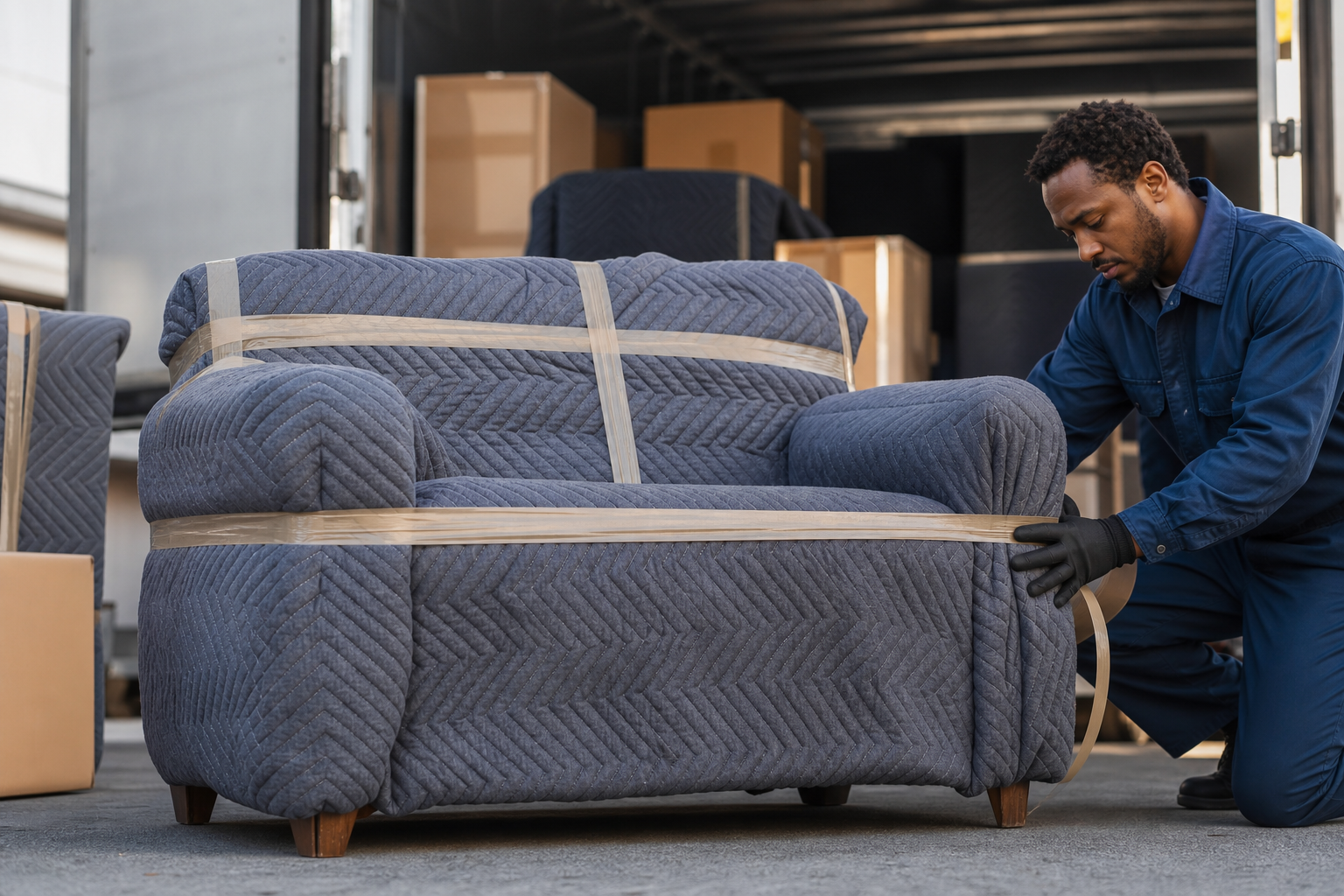
Moving blankets, also called pads, are thick, quilted coverings designed to protect wood, upholstered pieces, and fragile finishes from abrasions, dents, and scuffs during handling and transit. They are the padded layer movers use to absorb impact and prevent contact damage.
When blanket wrapping is required
Blanket wrapping is appropriate when furniture will be carried through tight corners or long distances, loaded into a truck, stored, or handled in multi-stop deliveries. Use blankets on hardwood dressers, cabinetry, sofas, mattresses for short-term protection, and any high-value finish that could be scratched or nicked in transit. Storage guidance recommends cleaning and drying surfaces before using blankets to avoid trapped dirt or moisture that could stain or encourage mildew (Yellowhead Storage).
Blanket wrap versus covers and plastic
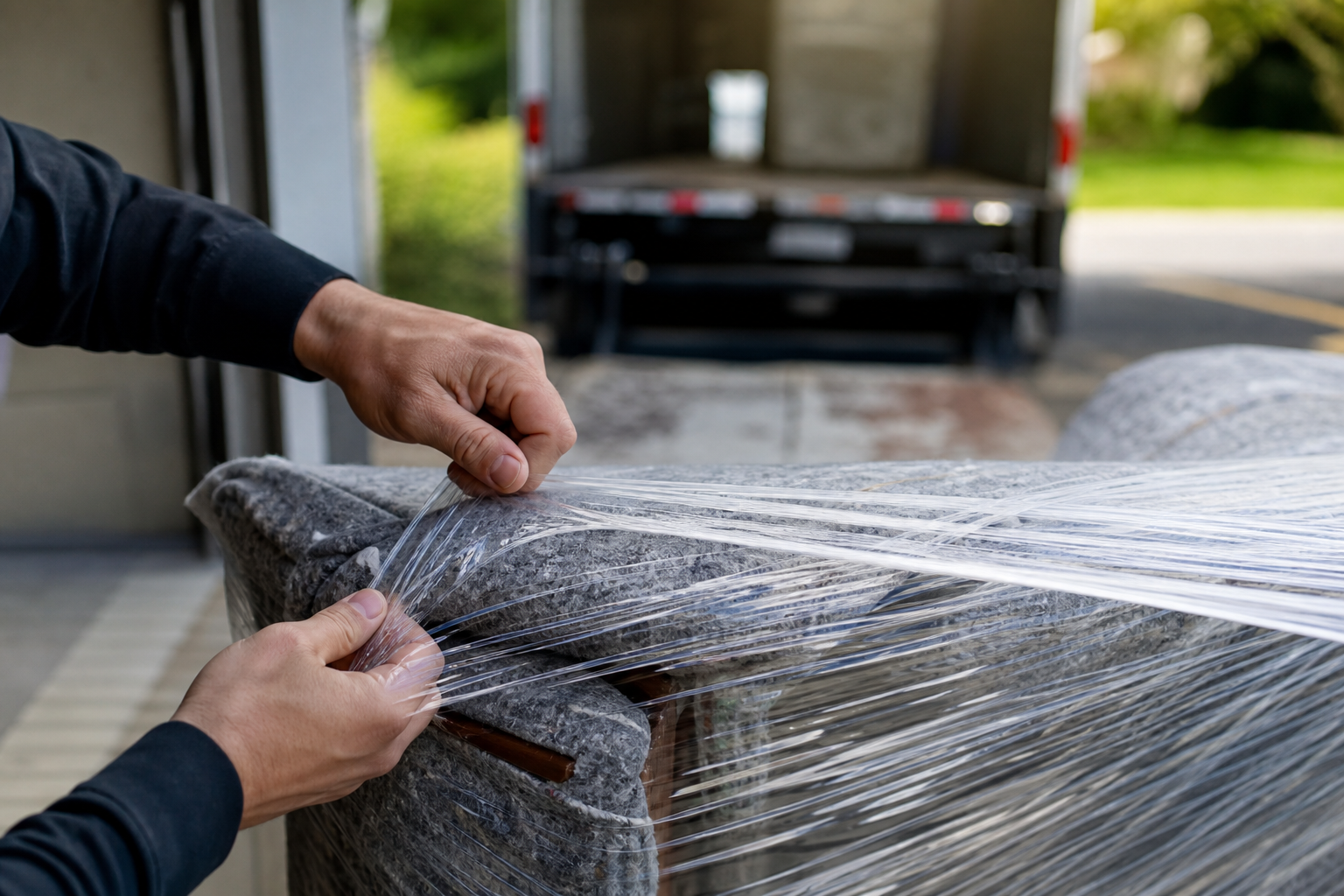
Lightweight furniture covers protect from dust, but they do not provide impact protection. Stretch wrap secures blankets in place and keeps drawers closed, but when used directly against wood it can trap moisture and damage finishes. The safe professional approach is a layered system: a breathable layer or blanket next to wood, then stretch wrap or straps externally when needed (Flex Moving), and use of stretch wrap to hold blankets steady for transit (PODS).
Mistakes that actually damage furniture
Using dirty or wet blankets
Why it matters: Dirty or damp blankets can transfer grime or trap moisture against wood and upholstery, causing stains, water marks, or mildew. Before wrapping, surfaces must be cleaned and fully dry to avoid trapping contaminants (Yellowhead Storage).
- How to verify: Inspect blankets on site for visible dirt, odour, or damp spots before use.
- Remediation: Replace or launder blankets and dry furniture before wrapping.
Wrapping wood directly with plastic stretch film
Why it matters: Stretch wrap against bare wood locks in moisture and can soften or lift finishes over time. A breathable barrier, such as a moving blanket or packing paper, should sit between the wood and any plastic film to prevent finish damage (Flex Moving).
- How to verify: Ask movers to show the sequence they will use for dressers, cabinetry, and antique wood.
- Remediation: Insist on a blanket or packing paper under any plastic wrap for wooden items.
Insufficient padding at corners and fragile edges
Why it matters: Corners and exposed edges take the brunt of impacts during loading and stacking. A thin single layer may not stop dents or chips.
- How to verify: Check for extra folded blanket layers or corner protectors on drawers, table corners, and ornate moulding.
- Remediation: Request folded blanket layers, foam corner protectors, or additional padding for vulnerable points.
Failing to secure blankets so they slip
Why it matters: Blankets that are not fastened can shift during handling and expose surfaces. Professionals use stretch wrap, moving tape, or straps over the blanket to lock it in place and keep drawers and cushions secure (PODS).
- How to verify: Watch how the crew secures the blanket. If they rely only on tucking, ask for an additional tie or wrap.
- Remediation: Require the use of stretch wrap or straps to hold blankets firmly during transit (TarpSupply).
Wrapping drawers and doors without locking or securing
Why it matters: Drawers and cabinet doors can swing open, damaging interiors and neighbouring pieces. Either remove contents or lock and secure moving parts before wrapping.
- How to verify: Confirm whether drawers are emptied or taped from the outside, and if drawers are tied shut or immobilized.
- Remediation: Ask movers to secure doors with straps or stretch wrap and to label items with internal contents removed where necessary.
Over-relying on thin furniture covers instead of padded blankets
Why it matters: Thin covers prevent surface scratches from dust but offer almost no impact protection. High-risk moves need the extra padding only moving blankets provide.
- How to verify: If the quote mentions covers, ask whether those covers are padded moving blankets or single-layer dust covers.
- Remediation: Upgrade to blanket wrapping for any item at risk of impact or pressure damage.
Using oversized blankets improperly
Why it matters: A blanket that is too large and bunched up can create pressure points, which may dent finishes or cause instability during stacking.
- How to verify: Check that crews fold and layer blankets to fit each item, rather than wrapping one oversized blanket around many pieces.
- Remediation: Ask movers to fold blankets to match the furniture profile and to use multiple blankets where necessary for even coverage (TarpSupply).
Hiring red flags to watch for in Mississauga and the GTA
When choosing movers, look beyond price. The following red flags indicate the crew may skip protections like blanket wrapping or provide inadequate service. For local services, note that some Mississauga companies advertise 24/7 scheduling, trained crews, and blanket wrapping as part of their core services (Sudan Movers). Use these questions to verify claims.
No clear answer about blanket use
Red flag: A mover avoids saying whether moving blankets will be used. Question to ask: “Will you use moving blankets and how will they be secured?” If the answer is vague, require a written description in the quote.
Verbal-only promises with no written service detail
Red flag: The estimate lists only a total price without specifying packing materials, blanket wrapping, or handling steps. Ask for exact inclusions in writing so you can hold the company accountable if protections are skipped.
Low-cost quotes that omit packing materials or protection
Red flag: Very low estimates that exclude supplies are likely to save labour by skipping protective steps. Ask: “Is blanket wrapping included in this quote or an add-on? If add-on, what is the cost?”
No proof of trained crews or moving practices
Red flag: The company will not describe crew training, supervision, or safety practices. Ask for brief descriptions of training and whether the crew follows a standard wrapping procedure. Local companies often highlight trained in-house crews and ongoing safety practice as a differentiator (Sudan Movers).
Refusal to inspect stairs, elevators, or loading docks in advance
Red flag: Movers who refuse a site visit or virtual survey may not plan for condo move constraints or dock logistics. Ask for an in-person or video inspection and a note in the quote about elevator protection and dock access requirements.
How professionals should wrap furniture correctly
Step 1: Clean and dry surfaces
Professionals remove dust, crumbs, and moisture before wrapping so dirt is not sealed against finishes (Yellowhead Storage).
Step 2: Add corner and edge protection
Place foam, folded blanket layers, or corner guards on exposed edges and delicate moulding.
Step 3: Place blanket and position furniture
Set the furniture in the centre of the blanket with excess material on all sides, fold or wrap fully around the piece, and smooth wrinkles to prevent pressure points (TarpSupply).
Step 4: Secure blanket with stretch wrap or straps
Use stretch wrap, moving tape, or straps to keep the blanket tight and to immobilize drawers and cushions during transit (PODS).
Step 5: Add an outer protective layer for long-distance or storage
For long hauls or storage, an outer layer can protect against dirt and pests. Always keep a breathable layer next to wood finishes to avoid trapped moisture (Flex Moving).
Verification checklist movers should complete
- Photograph each large item from multiple angles before loading.
- Sign condition notes and include blanket wrapping in the written quote.
- Confirm the securing method used for each piece and whether drawers were emptied or taped.
Condo, dock and truck logistics that change how blanket wrapping is done
Condo move rules, dock loading patterns, and truck stacking alter protection needs. Ask movers to pad elevator walls and doors, protect hallways, and provide a plan for dock-to-dock shipments where items may travel on pallets and require extra strapping. Local movers often list dock-to-dock and warehouse delivery as specific offerings, so confirm these capabilities when booking (Sudan Movers).
Decision criteria: when to DIY blanket wrapping and when to hire pros
- Item value and finish: Hire pros for antiques, high-value woods, and delicate upholstery.
- Complex handling or heavy items: Appliances, pianos, and oversized furniture require trained crews.
- Access limitations: Stairs, narrow hallways, and elevator rules favour professional teams.
- Insurance and claims: Always request written insurance and claims process details before the move.
Quick pre-move inspection and red-flag photo checklist
Photos to take: full front and back, close-ups of edges and finishes, and photos of any pre-existing marks. Red flags to capture: exposed unwrapped wood, wet or dirty blankets, unsecured drawers, or a crew refusing to use blankets. Record crew names, time stamps, and written confirmation that blanket wrapping was included in the quote. These steps strengthen any damage claim.
Common objections and short scripts
Client concern: “It will add cost.” Response: “Please show a bundled quote with and without blanket wrapping so we can compare the incremental cost versus the risk of repair.”
Mover pushback: “Plastic is enough for a short move.” Response: “Please explain how you prevent trapped moisture and finish damage when using plastic directly against wood.”
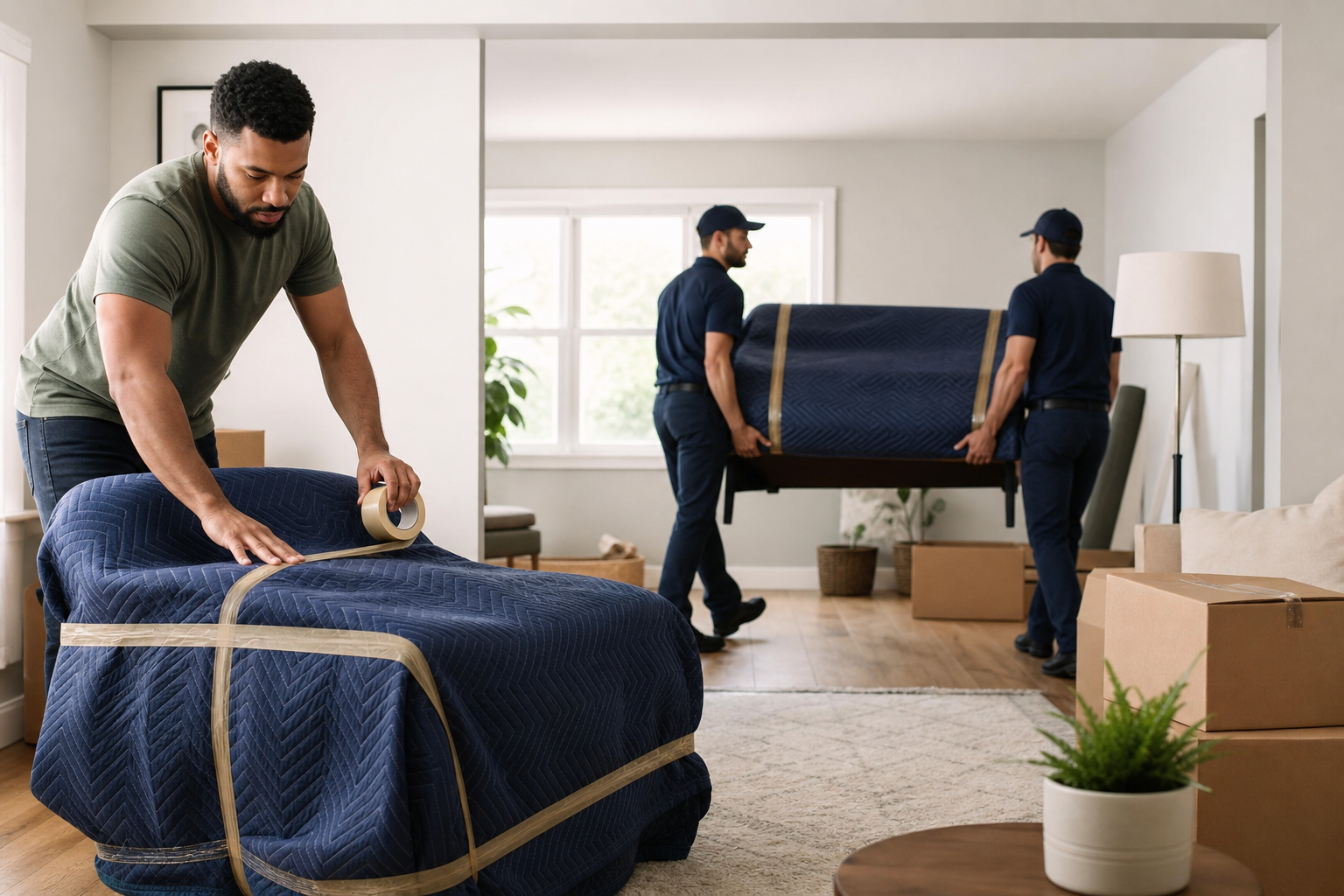
Client DIY option: Offer a hybrid approach. Clients can wrap small items while professionals handle heavy and high-value pieces with blankets and straps.
FAQ
Will plastic stretch wrap damage my wood furniture when used with moving blankets?
Stretch wrap can damage wood finishes if it is placed directly against bare wood because it can trap moisture. Use a breathable layer, such as a blanket or packing paper, between the wood and plastic, and then apply stretch wrap externally to secure the blanket (Flex Moving).
When should I insist on blanket wrapping instead of just furniture covers?
Insist on blanket wrapping for high-value pieces, items with fragile edges, anything that will be carried through tight spaces, or when the piece will be stacked in a truck. Thin covers are fine for storage dust protection only (Yellowhead Storage).
What questions should I ask a Mississauga mover to confirm blanket wrapping is included?
Ask: “Will moving blankets be used on each large item, and how will they be secured? Is that included in the written quote or an add-on? Can you provide a crew training or procedure summary for blanket wrapping?” Local movers often advertise 24/7 scheduling and trained crews, so verify those claims in writing (Sudan Movers).
Does blanket wrapping protect furniture during long-distance moves across Ontario?
Blanket wrapping protects against impact and abrasion, and when combined with correct securing and outer protection it can be effective for long-distance moves. For long storage or cross-province transit, confirm the mover will add an outer protective layer and document condition before transit (PODS).
How do I document missing or improper blanket protection for a damage claim?
Take time-stamped photos from multiple angles before and during loading, record crew names, and keep the written quote that lists blanket wrapping. If damage occurs, present your photos and the written service description to the mover as part of the claim process.
Ready to get specific answers for your move in Mississauga or the GTA? Contact Sudan Movers for a free consultation and a written quote that lists blanket wrapping and protective methods.